
What is a Plate Laser Cutter?
A laser plate cutter is a CNC-controlled cutting system that uses a high-powered fiber laser to cut thick metal plate — commonly ranging from around 1/4" up to 8" or more, depending on the machine and laser power. Unlike thinner sheet metal, which can be cut with lower-wattage lasers, thick plate requires significantly higher power (in the case of the EMP Colossus plate laser cutter, configurable from 6kW to 200kW) to maintain cut speed and edge quality as material thickness increases.
The system uses programmed cutting paths to guide the laser head across the plate, allowing manufacturers to produce accurate, repeatable parts without the manual setup and secondary finishing that heavy-plate cutting methods like plasma or flame cutting typically require.
Who Uses Laser Plate Cutters?
Laser plate cutting is used in industries that fabricate heavy structural and industrial components — including construction machinery, structural steel, shipbuilding, oil and gas, and defense manufacturing. These are environments where plate thickness, part accuracy, and weld-ready edges all matter simultaneously: a beam or bracket cut for a welded assembly needs to be dimensionally accurate and require little to no secondary grinding, even at several inches thick.
How Can a Laser Plate Cutter Help My Business?
A laser plate cutting system brings together several components engineered specifically for cutting thick material:
Built for the cut:
A high-powered laser source (configurable up to 200kW on machines like the Colossus) scaled to your typical plate thickness
A rigid, vibration-controlled bed — for example, the Colossus uses a ground-level rail system anchored to the shop floor to keep heavy plate stable during cutting
A water-cooled laser head built for sustained heavy-duty use, with sensors that monitor lens temperature and flag when maintenance is needed
What that translates to on the shop floor:
Maximum running speed of 52.5 in/sec and positioning accuracy of ±0.004", so large plate can be processed without sacrificing repeatability
Optional bevel cutting (up to 45°, in V, X, Y, and K configurations) that prepares weld joints directly, without a separate grinding step
A modular cutting bed that can expand over time (up to 72 ft on the Colossus) as production volume grows
For a broader overview of available machine configurations and how the technology works,
Read our guide to industrial fiber laser cutters
Key Benefits of Laser Plate Cutting Process
| Benefit | Operational Advantage |
|---|---|
| Power Scaled to Plate Thickness | Configurable from 6kW to 200kW, so laser power is matched to plate thickness up to 8" rather than a fixed, one-size output |
| Maximum Speed & Thickness | Up to 52.5 in/sec maximum running speed; cutting speed at thickness depends on laser power and material. Can reduce cycle time on heavy plate compared to plasma or flame cutting |
| Positioning & Repeatability Accuracy | ±0.004" positioning accuracy and ±0.002" repeatability across production runs, minimizing part-to-part variation |
| Bevel Cutting for Weld Prep | Up to 45° bevel cuts in V, X, Y, and K configurations, removing the need for secondary grinding on weld joints |
| Large-Format Cutting Bed | Cutting widths up to 13 ft and lengths up to 72 ft, so large structural plate can be cut without repositioning |
| Material Range at Full Thickness | Cuts steel, stainless steel, and aluminum plate up to 8" thick |
Plasma vs Laser Cutter for Steel Plate Cutting
Laser and plasma cutting are the two most common methods for processing steel plate, and manufacturers frequently compare them when selecting equipment. The right choice depends on plate thickness, tolerance requirements, edge finish expectations, and production volume.
For years, the working assumption was that plasma was the faster choice once plate got thick — generally above 1 inch. At high laser power, that no longer holds. IPG Photonics, which manufactures fiber laser sources, including sources offered on EMP machines, published cutting-speed comparisons in which lasers of 40 kW and above cut mild and stainless steel faster than plasma across the 10–40 mm (0.4–1.6 in.) range it reports. At 40 mm, a 60 kW laser cut mild steel about 2.5 times faster than a 460 A plasma system, and stainless about 3.2 times faster. The same data shows plasma ahead at 30 kW and below on thicker sections. Cutting speed is one input; pierce time, edge requirement, gas, and capital decide the rest.
| Feature | CNC Laser Cutting | CNC Plasma Cutting |
|---|---|---|
| Best For | Precision plate cutting across a wide range of thicknesses | Heavy plate cutting where upfront equipment cost is the primary concern |
| Material Thickness | Up to 8" or more, with power configurable up to 200kW to match plate thickness | Commonly used on thick plate, though high-power fiber lasers now match or exceed plasma speed in the same range |
| Cutting Speed | At 40 kW and above, faster than plasma on 10–40 mm mild and stainless steel in one laser-source manufacturer's published tests | At laser powers of 30 kW and below, can be faster on thicker sections |
| Edge Quality | Clean, weld-ready edges with minimal dross | Rougher edges, often requiring grinding or secondary finishing |
| Positioning Accuracy | High, repeatable accuracy suited to tight-tolerance parts | Lower precision, better suited to less tolerance-critical cuts |
| Heat-Affected Zone | Smaller HAZ, reducing warping and distortion | Larger HAZ due to higher heat input |
| Initial Investment | Higher upfront cost | Lower upfront cost |
| Ideal Industries | Structural steel, shipbuilding, oil and gas, defense, and heavy equipment fabrication | General fabrication and structural steel work where precision is less critical |
When Laser Cutting Is the Better Choice
Laser cutting is generally the stronger choice for:
Steel, stainless steel, and aluminum plate parts that require accurate, repeatable tolerances
Welded assemblies, where weld-ready edges reduce fit-up and prep time
Parts with fine holes, slots, or intricate contours
High-utilization production environments, where throughput drives return on investment
Shops looking to consolidate multiple plasma cutters into a single high-power laser system to reduce floor space
When Plasma Cutting May Still Make Sense
Plasma cutting can still be a reasonable choice for:
Shops with lower upfront equipment budgets
Cuts where fine tolerance and edge finish are not critical
Lower-utilization cutting, where the throughput advantage of a laser matters less
Facilities with existing plasma infrastructure already in place
For manufacturers evaluating steel plate cutting equipment, the decision increasingly comes down to production volume and precision requirements rather than plate thickness alone. As fiber laser power has increased, the thickness threshold that once favored plasma has moved substantially — and for many high-volume or precision-driven operations, a high-power laser plate cutter now delivers both the speed and the edge quality plasma cannot match.
What Materials Can Laser Plate Cutters Handle?
Our laser plate cutting systems are designed to process a wide range of metals across industrial fabrication and manufacturing environments. The right laser configuration depends on the material type, thickness, required edge quality, and production volume — high-power fiber lasers like the Colossus (configurable from 6kW to 200kW) can cut significantly thicker material than standard shop lasers, particularly on stainless steel and aluminum, where thickness capability scales closely with available power.
| Material | Typical Max (Standard Wattage) | High-Wattage (40kW+) | Assist Gas | Typical Applications |
|---|---|---|---|---|
| Mild / Carbon Steel | ~1" (25mm) | ~2.75" (70mm) | Oxygen | Structural components, heavy equipment frames, industrial machinery parts |
| Stainless Steel | ~1/2" (12mm) | ~2.75" (70mm) | Nitrogen | Pressure vessel components, food-grade processing equipment, marine and chemical processing parts |
| Aluminum Plate | ~1" (25mm) | ~2.75" (70mm) | Nitrogen | Structural transportation components, marine fabrication, heavy equipment panels |
Cutting performance varies according to laser power, material thickness, assist gas and the required edge quality. Review our fiber laser cutting process parameters for indicative power and speed recommendations.
A Note on Copper and Brass
Copper and brass are highly reflective at fiber laser wavelengths, which makes them difficult to cut consistently and can risk damage to laser optics — a limitation that doesn't improve at higher power. For these two metals, plasma or waterjet cutting is typically the better-suited process. EMP's laser plate cutting systems are optimized for mild steel, stainless steel, and aluminum; if your application calls for copper or brass plate, we can advise on the right process for your project.
For more information about mild, stainless and galvanised steel applications,
See our complete guide to fiber laser cutting for steel.
Industries that Use High-Power Plate Laser Cutters
High-power fiber laser plate cutters serve a wide range of heavy fabrication industries, often working alongside plasma cutting depending on plate thickness, tolerance requirements, and production volume.
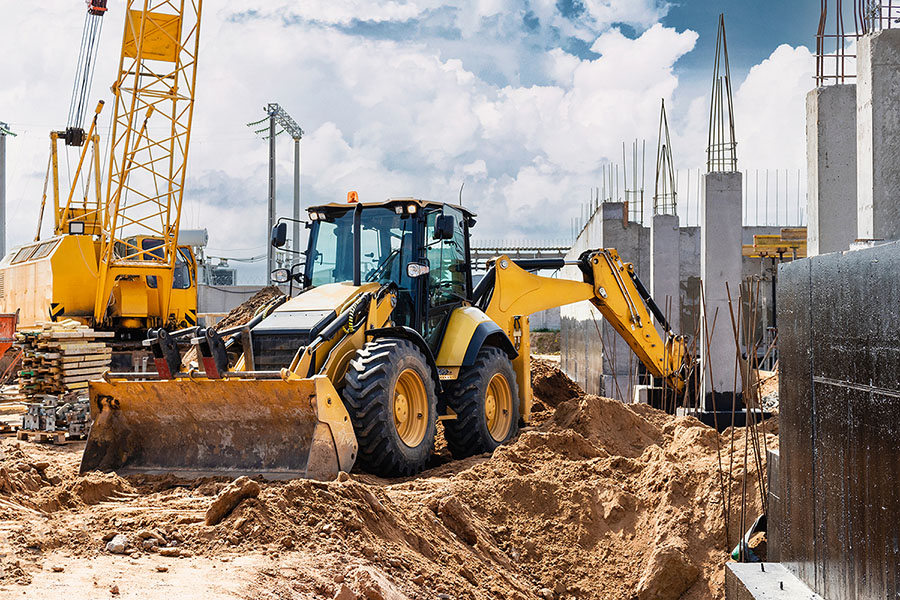
Heavy Equipment & Construction Machinery
Used to fabricate excavator, bulldozer, and crane components, agricultural equipment, and mining machinery from thick mild steel and abrasion-resistant plate (AR400/AR500). Lasers deliver precise hole quality and tight tolerances for welded assemblies, reducing secondary machining.
When is plasma used? Plasma remains common for very thick steel, large structural components, and lower-cost high-volume cutting.
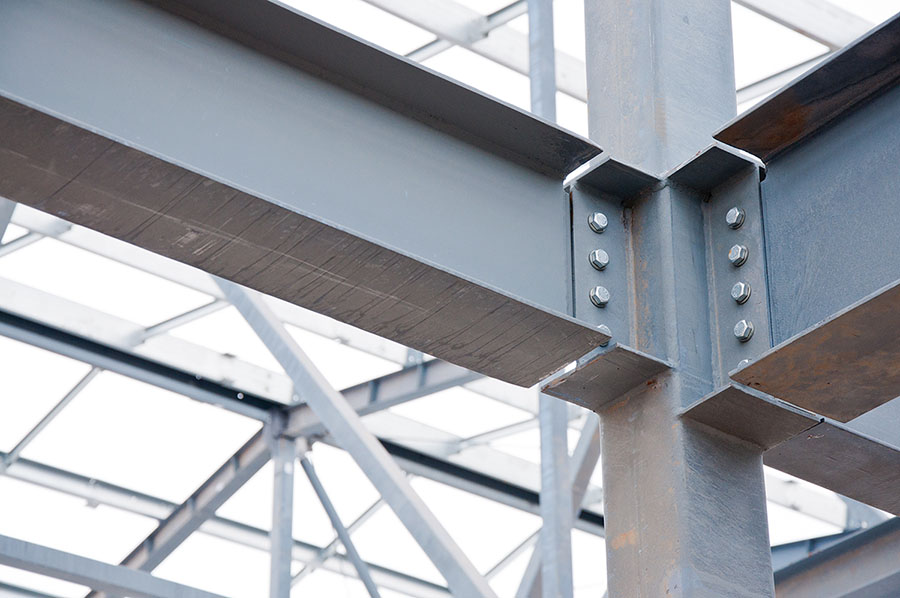
Structural Steel & Construction
Beams, base plates, gussets, columns, and bridge components benefit from the cleaner edges and faster processing lasers provide on medium-thick plate, along with better fit-up for welding.
When is plasma used? Plasma is often used for structural steel over roughly 1" thick, large-format plate, and jobs where edge finish is less critical.
See our full article on construction for more.
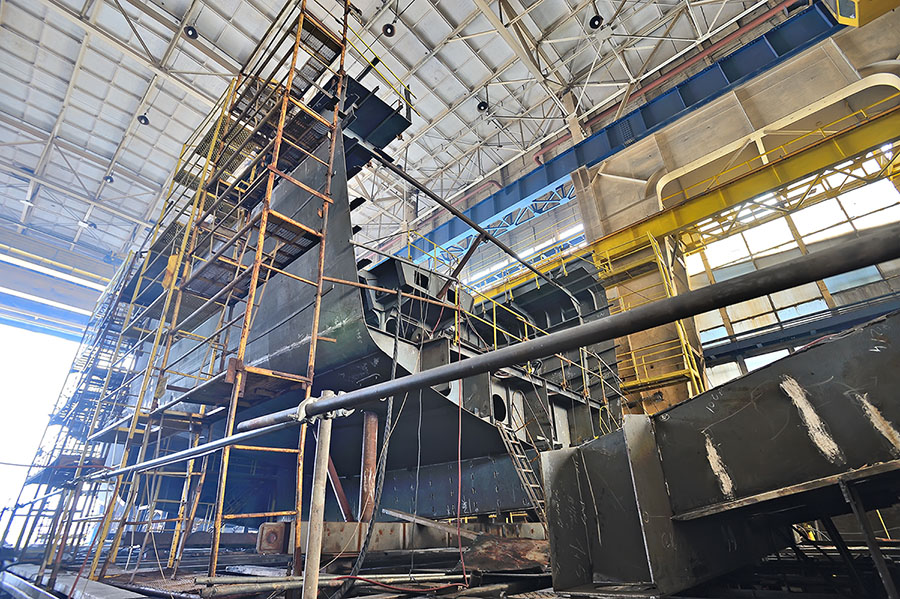
Shipbuilding & Marine
Hull sections, bulkheads, deck plates, and reinforcement structures gain from reduced distortion, consistent part quality, and easier automation integration when cut with fiber lasers.
When is plasma used? Plasma remains very common in shipyards for heavy marine plate, extremely large parts, and outdoor or rugged fabrication environments, since it handles thick carbon steel economically.
See our full article on shipbuilding for more.
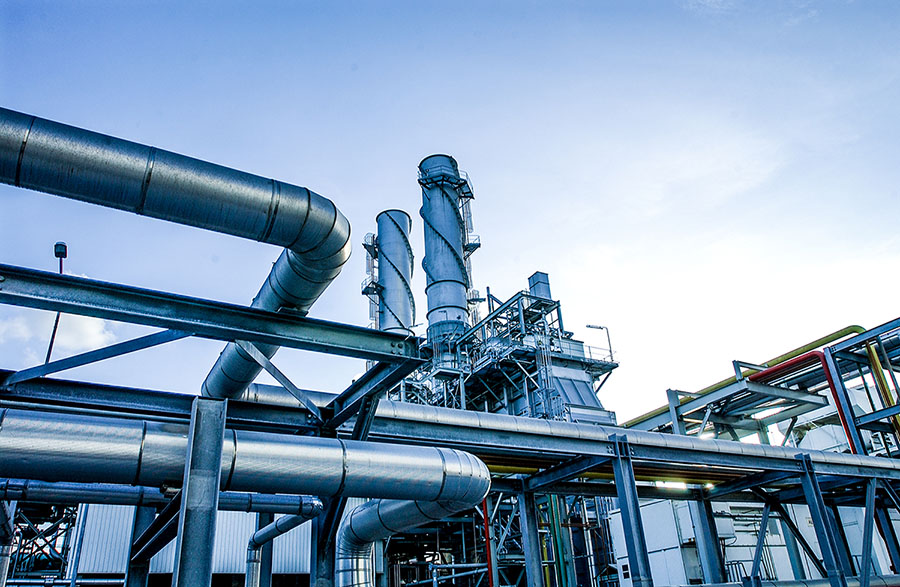
Oil & Gas / Energy
Pressure vessel components, pipe supports, skids, tanks, and drilling equipment call for precision holes and slots, along with clean edges on stainless and alloy materials, reducing rework.
When is plasma used? Plasma is still used for thick carbon steel plate and large energy infrastructure projects where tolerances are less critical.
See our full article on oil & gas for more.
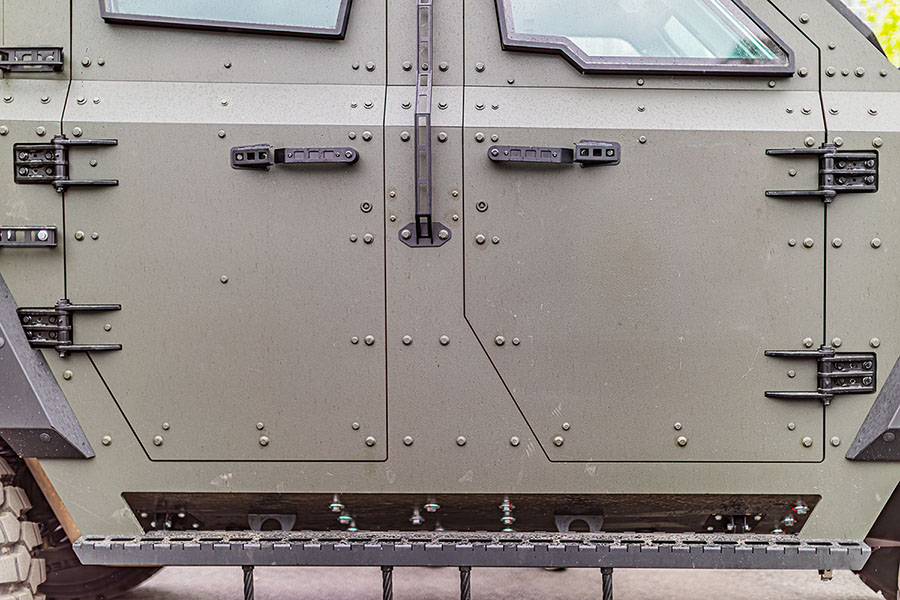
Defense & Armor Fabrication
Armored vehicle panels, protective structures, and heavy-duty enclosures require precision cutting of hardened materials with a minimal heat-affected zone and superior edge quality.
When is plasma used? Plasma is often used for thick armor plate and rough structural cuts prior to machining.
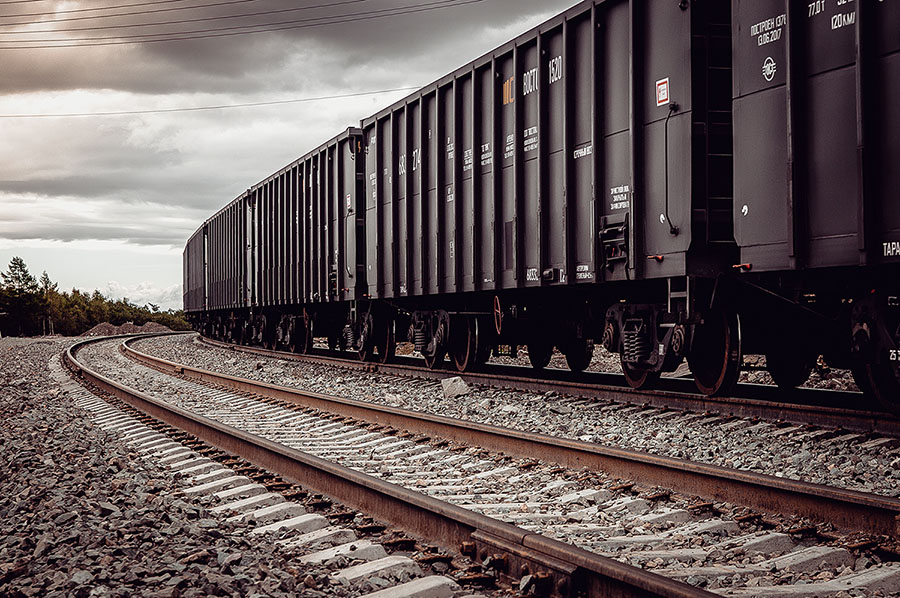
Transportation & Rail
Rail car frames, trailer chassis, heavy truck components, and vehicle panels benefit from the repeatability, automated production, and better weld prep that laser cutting provides.
When is plasma used? Plasma is commonly used for thick carbon steel frames and other large fabrication parts.
See our full article on trailer manufacturing for more.
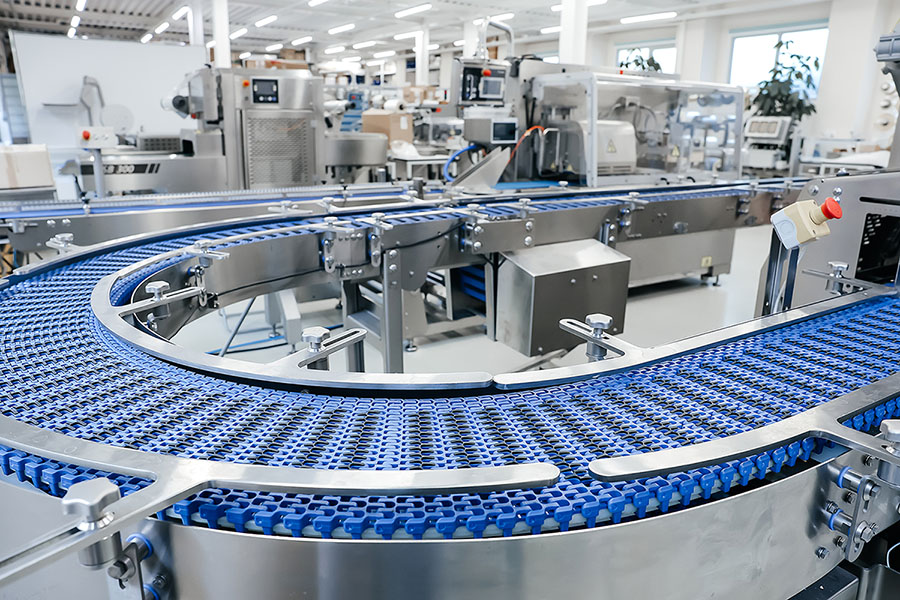
Industrial Equipment Manufacturing
Machine frames, conveyor systems, industrial enclosures, and material handling equipment gain precision fabrication, faster downstream assembly, and a better cosmetic finish.
When is plasma used? Plasma is often the choice for heavy frame components and lower-precision parts.
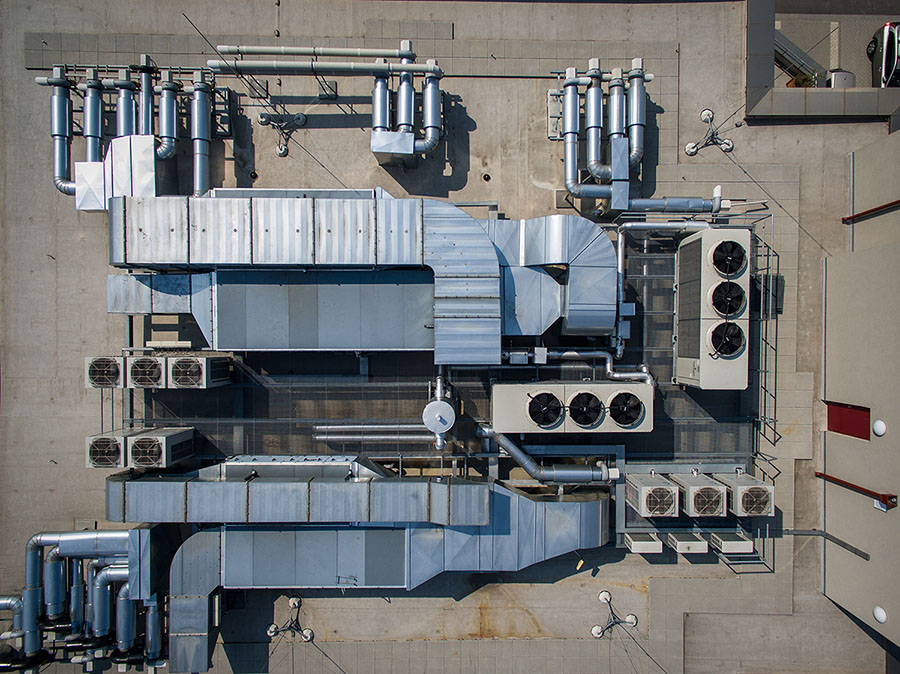
HVAC & Industrial
Ducting, ventilation systems, air handling components, and panel fabrication rely on flatbed laser systems to process galvanized steel, stainless steel, and sheet metal cleanly and consistently.
Explore Our Laser Plate Cutting Systems
EMP Colossus Ground-Rail Large Format Fiber Laser Plate Cutter
The Colossus is EMP's answer to cutting plate at the thick end of the range — up to 8 inches — without giving up the accuracy and edge quality expected on thinner material. A ground-level rail system anchored directly to the shop floor keeps the gantry vibration-free even on heavy, large-format plate, which is what allows the Colossus to hold ±0.004" positioning accuracy and ±0.002" repeatability at thicknesses where less rigid systems start to lose precision.
An optional bevel cutting head produces 45° bevels in V, X, Y, and K configurations directly from the cut — the same weld-prep capability referenced earlier on this page — so heavy structural parts can go straight to welding without a secondary grinding step.
The cutting bed itself is modular, with table sections that expand independently of the machine's core, so a shop can start with the working area it needs today (up to 13 feet wide and 72 feet long) and scale up as production grows, rather than replacing the system outright.
| Specification | Colossus |
|---|---|
| Power Options | Configurable from 6kW to 200kW |
| Bed Configuration | Rigid ground-level rail system with fully enclosed gantry |
| Working Area | Expandable modular cutting table, up to 13 ft wide x 72 ft long |
| Cutting Thickness | Up to 8 inches |
| Optional | Bevel cutting head (45°, V/X/Y/K configurations) |
| Software Compatibility | CypCut |
See Specs Get a Quote
Fully Customizable Laser Cutting Systems
Not every fabrication environment operates the same way. Rather than a one-size-fits-all machine, Colossus-class systems can be configured around your production workflow, material handling needs, and long-term goals.
Custom Bed Sizes & Machine Configuration
Bed width, length, and modular table sections can be configured to match your facility and production volume, and expanded later as requirements grow.
Paired with Tube Cutting for Mixed Production
For fabrication environments that need both plate and tube processing, we configure a dedicated tube laser system to run alongside the plate cutter, so each machine stays optimized for its own material and geometry. See our Tube Laser Cutting Machines page for tube-specific specs.
Automation & Material Handling Integration
Automated loading systems, conveyors, and other material handling equipment can be integrated to reduce manual handling and support continuous production.
Extraction & Environmental Configuration
Fume extraction and filtration requirements vary by material and facility, so these systems are configured around your specific production environment rather than a standard default.
Whether you're expanding an existing fabrication workflow or building a fully automated production environment, we can configure a system around your requirements.
Designed for Industrial Throughput
Industrial fabrication depends on more than raw cutting speed — consistent output across long production runs requires the right combination of motion control, material handling, and machine reliability.
Automatic Cutting Height
Automatically adjusts to maintain consistent cut quality as plate surfaces vary, without manual head adjustments between cuts.
Advanced Nesting Software
Nests parts to maximize material utilization across steel, stainless steel, and aluminum plate, reducing scrap on high-volume runs.
Servo-Driven Motion & Accuracy
Maintains the positioning accuracy and repeatability established earlier on this page (±0.004" positioning, ±0.002" repeatability) consistently across long production runs, not just on a single part.
Automated, Multi-Shift Production
Automated loading and heavy-duty, production-grade components support continuous batch runs across multiple shifts with minimal manual intervention.
Whether you're increasing production capacity or improving workflow efficiency, we can help configure a system around your manufacturing requirements.
Built for Production, Backed by Experience
It's easier to enter the world of laser plate cutting with EMP by your side—even for those new to the technology, we provide expert installation, calibration, and training to ensure your machine is fully operational from day one.

Sourcing & Product Curation

Industrial-Grade Reliability

Custom-Built Solutions

Professional Installation

U.S.-Based Support and Training

Flexible Support Contracts
How We Work
From expert planning, delivery and installation to service, training and calibration, EMP Laser provides fast, reliable and professional support.
FAQ
Cutting thickness depends on laser power, material type, and machine configuration. High-power fiber laser systems like the EMP Colossus can cut steel, stainless steel, and aluminum plate up to 8 inches thick, with thickness capability scaling closely with available power (for example, up to roughly 2.75" at 40kW across all three materials). EMP can recommend the right power configuration based on your typical thickness range.
Laser cutting generally offers better accuracy, cleaner edges, and less secondary finishing. On speed, laser power decides it: in IPG Photonics' published comparison, lasers of 40 kW and above cut mild and stainless plate faster than plasma from 10 to 40 mm, while at 30 kW and below plasma can be faster on thicker sections. Plasma keeps a lower upfront cost and remains the practical choice for some shops.
Yes. CNC fiber laser systems are commonly used to cut stainless steel plate for pressure vessel components, food-grade processing equipment, and marine and chemical processing parts.
High-power fiber laser systems like the Colossus deliver ±0.004" positioning accuracy and ±0.002" repeatability, supported by precision motion systems and CNC controls that maintain consistency across long production runs.
CNC laser plate cutting systems are used across:
- Heavy equipment and construction machinery
- Structural steel and construction
- Shipbuilding and marine
- Oil and gas / energy
- Defense and armor fabrication
- Transportation and rail
- Industrial equipment manufacturing
Yes. EMP doesn't offer a single machine that cuts both plate and tube, but we can configure a dedicated tube laser system to run alongside a plate cutter, so each machine is optimized for its own material and geometry while supporting a combined production workflow.
Copper and brass are highly reflective at fiber laser wavelengths, making them difficult to cut consistently and risking damage to laser optics — a limitation that doesn't improve at higher power. Plasma or waterjet cutting is typically the better-suited process for these two metals.
For many applications, yes. High-power fiber lasers can cut bevels — such as 45° V, X, Y, and K configurations — directly into the plate, preparing edges for welding without a separate grinding step. This reduces or eliminates secondary finishing on structural and welded assemblies.
This varies by machine, but large-format systems like the Colossus offer modular, expandable cutting beds with working areas up to 13 feet wide and 72 feet long, supporting large structural plate without repositioning.
Key considerations include material type, thickness range, bed size, laser power, automation requirements, software compatibility, production volume, available floor space, and long-term support.
Ready to Get Started?
Our team can help you compare machine configurations, understand material capabilities and choose a laser cutting solution built around your production goals.
Talk to Our Team